
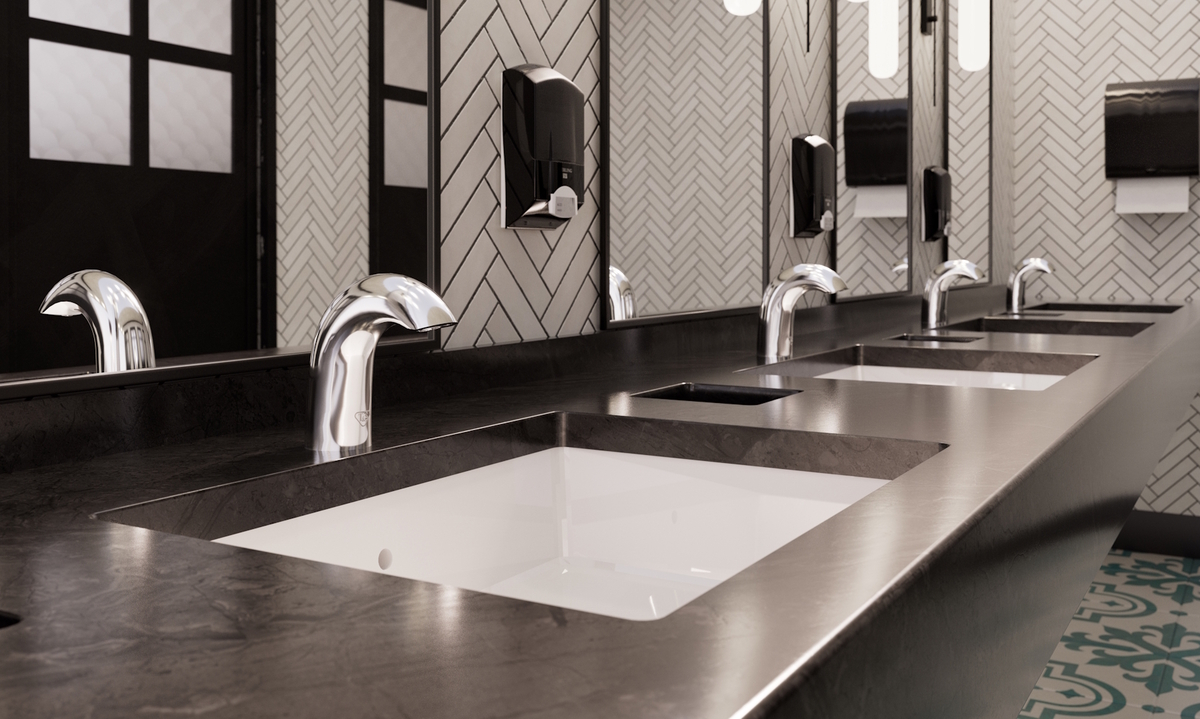
A commercial restroom is easy to overlook when a business is focused on customers, employees, and day-to-day operations. Yet it is one of the few parts of a property that many visitors will use directly. A clean, comfortable space can support a positive impression, while poor lighting, worn fixtures, or a cramped layout can make an otherwise well-kept business feel neglected.
Improving the restroom does not always require a complete renovation. Small businesses can often make a noticeable difference by looking at how the room is used, choosing durable materials, improving privacy, and making routine maintenance easier.
Start With the Way People Use the Space
The right restroom layout depends on the business. A small office may have fairly predictable traffic, while a restaurant, retail store, or service business can have customers coming and going throughout the day.
Consider that difference before selecting fixtures or finishes. Position doors, sinks, toilet compartments, dispensers, and waste bins so people can move around without unnecessary obstacles. If the room is small, careful planning can make it feel less crowded without changing its actual dimensions.
Also consider the employees who maintain the space. Cleaning supplies need to be accessible, dispensers should be easy to refill, and frequently used surfaces should not be difficult to reach. A restroom that works well for both visitors and staff will generally be easier to keep in good condition.
Think Beyond the Restroom Itself
The needs of a commercial restroom are often tied to the building around it. A newer retail center may have plenty of room for a carefully planned facility, while an older property may require owners to work within an existing footprint. Customer traffic, cleaning frequency, and the type of business all influence how much wear the space will receive.
Those differences are easy to see across the Southeast, where established commercial districts sit alongside growing suburban developments and newer mixed-use properties. Tennessee has a particularly varied business environment, with restaurants, offices, healthcare facilities, retail centers, and hospitality properties operating in both older and recently developed areas.
That variety matters when renovating a restroom. A business with steady customer traffic may need to focus more on durability and easy maintenance, while a smaller office may have more flexibility in choosing finishes and fixtures. Space can also be a deciding factor, especially when an existing layout has to accommodate accessibility requirements without making the room feel cramped.
Privacy is another part of that equation. Partitions need to suit the room's size and layout while providing privacy appropriate for the people using it. For businesses evaluating their options, Tennessee bathroom partitions can be part of that broader planning process rather than a separate finishing decision.
Choose Materials for Daily Use
Commercial restrooms face repeated cleaning, moisture, and regular contact with fixtures and surfaces. A material that looks attractive when first installed may not be the best choice if it is difficult to maintain or shows damage quickly.
Business owners should consider how much traffic the restroom receives, how often it will be cleaned, and how easily individual components can be repaired or replaced. Durability does not necessarily mean choosing the most expensive option. It means selecting materials that match the property's actual conditions.
The same principle applies to hardware. Hinges, locks, handles, faucets, and dispensers all receive repeated use, so reliability should be part of the decision rather than an afterthought.
Plan for Accessibility Early
Consider accessibility while the restroom layout is still being developed. The Americans with Disabilities Act includes requirements for accessible toilet rooms, including clear floor space, doors, toilet compartments, lavatories, and other fixtures.
For example, accessible toilet compartments have specific requirements for dimensions and door arrangements. Those requirements can influence how the rest of the room is organized, so it is best to account for them before construction or installation begins. For a small business, planning these details early can also prevent the added expense and disruption of later structural changes.
Make Cleaning Easier
A restroom can have an excellent layout and durable materials and still provide a poor experience if it is not maintained consistently.
Simple routines can help. Employees can check soap and paper supplies, look for leaks, wipe down high-touch areas, and report damaged fixtures before a small issue becomes a larger repair. Keeping frequently used supplies easy to access can also make these checks less time-consuming.
Material selection also plays a role. Smooth, practical surfaces and accessible fixtures can make daily cleaning more efficient. When maintenance is built into the design, staff are less likely to waste time working around hard-to-reach areas.
Pay Attention to the Details
Some improvements require very little construction work. Good lighting can make a restroom feel more comfortable and easier to navigate. Position mirrors at practical heights, and place soap dispensers, hand dryers, and waste bins within easy reach without blocking movement.
The visual design should also match the rest of the business. A restroom does not need elaborate finishes to look considered. Coordinated materials, clean surfaces, and a simple color scheme can make the space feel like a natural part of the property.
These details may seem minor individually, but together they can change how the room feels.
Treat the Restroom as Part of the Customer Experience
For small businesses, a commercial restroom does not need to be impressive in a luxury-hotel sense. It needs to work.
A sensible layout, adequate privacy, durable materials, accessible features, reliable supplies, and regular maintenance can create a space that customers are comfortable using, and employees can realistically manage.
The best improvements usually start before installation. By considering traffic, building conditions, available space, and maintenance requirements early in the process, small businesses can avoid common problems and create a restroom that remains functional long after the renovation is finished.
A well-planned restroom may not be the reason someone chooses a business, but it can certainly support the overall experience once they are there.